Beginner's Guide to Reading Seed Packets: Spacing, Depth, and Days to Maturity
There's a moment every new gardener knows. You're standing in the aisle with a packet of lettuce seeds, and the back of it reads less like instructions and more like a tax form: row spacing, seed depth, days to maturity, F1, pelleted, direct sow. That's a lot of homework for something the size of a postage stamp.
The reassuring part is that nearly every packet answers the same handful of questions in roughly the same order. Learn to read those numbers once, and you can pick up any packet — a swap-meet tomato, a friend's saved beans — and sow it with confidence.
Before you get distracted by the fine print, find these five things. They're usually printed together on the back, sometimes in a small chart.
If a packet lists only one spacing number, assume it's the distance between plants in the row. That's the one that affects how your crop grows. Row spacing matters mainly for farm-style rows and market gardens, less so for a raised bed or a container.
New gardeners sow thickly because it feels safer, and honestly, it is — for germination. Then the seedlings come up, nobody thins them, and the bed turns into a thicket. Crowded plants compete for water, nutrients, and light, and they stay small and stressed. Dense foliage also traps moisture and slows airflow, which is how you end up with mildew on your zucchini by July.
Typical final spacings: carrots 2 to 3 inches apart, lettuce 8 to 12, bush beans 4 to 6, peppers 18 to 24, tomatoes 24 to 36. Your packet's number wins over any of these.
The spacing on a packet is almost always the spacing you want at harvest, not the spacing you sow at. Sow closer, then thin.
Thin when seedlings are about 2 inches tall and have their first true leaves. Snip the extras at soil level with small scissors rather than pulling, which disturbs the roots of the plants you're keeping. Eat the thinnings — baby carrot, beet, and kale leaves are a real reward for doing the chore.
The old rule of thumb is to plant a seed about two to three times as deep as the seed is wide, and it holds up well. Lettuce, basil, and most tiny flower seeds barely need covering — press them into the surface and dust a little soil or vermiculite over them. Beans and peas go about an inch down. Carrots and other slow starters prefer a quarter inch.
Too deep is a more common failure than too shallow. A seed only has so much stored energy to push a shoot to the surface, and the soil a few inches down is cooler and can stay wet enough to rot a seed before it sprouts. Too shallow is a problem too, though — the seed dries out or gets washed away by the first hard watering. Water gently after sowing, with a fine mist or a soft shower, and check the surface daily until you see green.
This is the number that gets misread most often. Days to maturity counts from a specific starting point, and which point depends on how the crop is grown. For direct-sown crops like radishes and beans, it's counted from the day seedlings emerge. For transplanted crops like tomatoes, peppers, and most brassicas, it's usually counted from the day you set the transplant out — not from when you sowed the seed indoors. That difference can be six weeks.
Read it as an estimate under good conditions, not a promise. Heat, cold, drought, and short days all stretch it out. A "60-day" tomato is a 60-day tomato in a warm, sunny season; in a cool one it may take 80.
Use it for planning backwards. If you want tomatoes in August and the packet says 75 days from transplant, count back a little over ten weeks from your target and set out plants then — or start seeds indoors five to six weeks before that.
The front of the packet carries a few shorthand terms. None are complicated once translated.
Row spacing figures assume you're walking between rows. In a raised bed or a container, you can usually ignore them and use the in-row spacing as your guide in every direction — that's the idea behind dense, bed-style planting.
Also check the sun requirement against your actual garden. "Full sun" means six or more hours of direct light, and a spot that's bright all morning can still be too shaded for tomatoes. And look for the packed-for or sell-by year on the flap. Seed viability drops with age, and older packets are worth sowing more thickly.
One habit turns a stack of half-used packets into a useful record: jot the sowing date on the front with a permanent marker the day you plant. Add a note when the seedlings emerge, and again at first harvest. Next spring you'll know whether that "55-day" bean really took 55 days in your garden, which is far more useful than any catalog's number. Keep the leftovers somewhere cool and dry — a sealed jar in a dark cupboard works fine — and label it with the year.
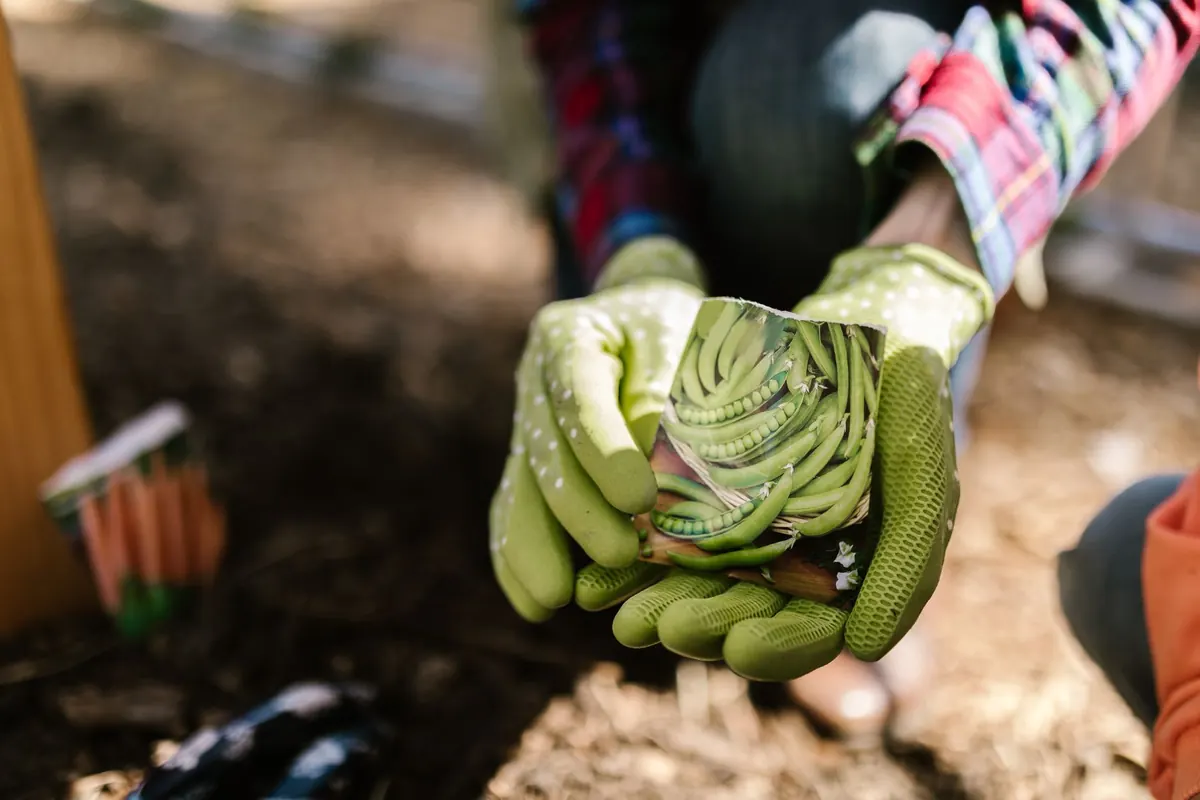
Photo: RDNE Stock project / Pexels
Previous Post
How to Design a Small Backyard Garden with Raised Beds and a Seating Nook
Next Post
10 Common Indoor Plant Watering Mistakes and How to Fix Them